On Dec. 4, Gail Breslow’s client, a Haitian national, arrived at the historic Faneuil Hall to take her oath of citizenship. It was expected to be the culmination of several years of attorney fees and paperwork, and the final step before she could become a citizen.
But when she arrived, Breslow said her client was told she would not be swearing in.
“She was pulled out of line, she reported that others were as well. She was told that her ceremony was canceled and she should not enter the building,” said Breslow, the executive director of Project Citizenship, an organization that represents migrants going through the naturalization process in Massachusetts.
Breslow says her client is one of countless immigrants whose lives have been thrown into limbo and whose dreams of citizenship have been curtailed “at the finish line” as the Trump administration has paused immigration decisions for people from countries it deems to be “high-risk.”
New US citizens recite the Oath of Allegiance before receiving their naturalization certificates during a formal ceremony at Midway International Airport in Chicago, Illinois, June 25, 2025.
Kamil Krzaczynski/AFP via Getty Images
After an Afghan national was suspected of fatally shooting one National Guard member and severely injuring another, the Trump administration paused all asylum decisions, expanded a travel ban, and has also cancelled naturalization ceremonies across the country.
The suspect in the shooting, Rahmanullah Lakanwal, has pleaded not guilty to first-degree murder charges
In a memo issued on Dec. 2, U.S. Citizenship and Immigration Services said those subject to the directive may have to undergo “a thorough re-review process, including a potential interview and, if necessary, a re-interview, to fully assess all national security and public safety threats.”
Critics of the move say the administration is using the November shooting as a way to scapegoat immigrants and advance their deportation agenda.
“USCIS has paused all adjudications for aliens from high-risk countries while USCIS works to ensure that all aliens from these countries are vetted and screened to the maximum degree possible. The pause will allow for a comprehensive examination of all pending benefit requests for aliens from the designated high-risk countries. The safety of the American people always comes first,” a DHS spokesperson told ABC News in a statement.
Since early December, Breslow says at least 21 of her clients have been told not to show up to their naturalization ceremony, the final and necessary step that immigrants have to complete after they’ve undergone several rounds of vetting and interviews and have been told they’ve been approved for citizenship.
“These actions that the administration is taking are not making our country safer by any stretch, and it’s a thinly veiled effort to encourage people who are from particular backgrounds, whether it’s religious or ethnic or racial, to up and leave. I won’t say to go home, because this is their home, but this is xenophobia at its most stark,” Breslow said.
In November, an Afghan woman who came to the United States in 2018 under a Special Immigrant Visa, which grants legal residency to people who have helped the U.S. government abroad, had an oath ceremony scheduled, but was unable to attend because she was hospitalized, her attorney Habib Hasbini told ABC News. Hasibini says his client cooked for soldiers in Afghanistan and that her son helped translate for them. Although the ceremony was rescheduled for December, she received notice that the ceremony had been canceled for her.
“If she didn’t go to the hospital, she would have her citizenship by now,” Hasbini, a San Diego-based immigration attorney, said.
ABC News has obtained a copy of one of the cancellation notices given to immigrants scheduled to appear in a ceremony.
“This is to advise you that, due to unforeseen circumstances, we have had to cancel the previously scheduled Oath Ceremony on Wednesday, December 10, 2025,” the notice, dated Dec. 2, says in part. “We regret any inconvenience this may cause. We will advise you of any further action taken on this case, including any rescheduled interview appointment information, under separate notice.”
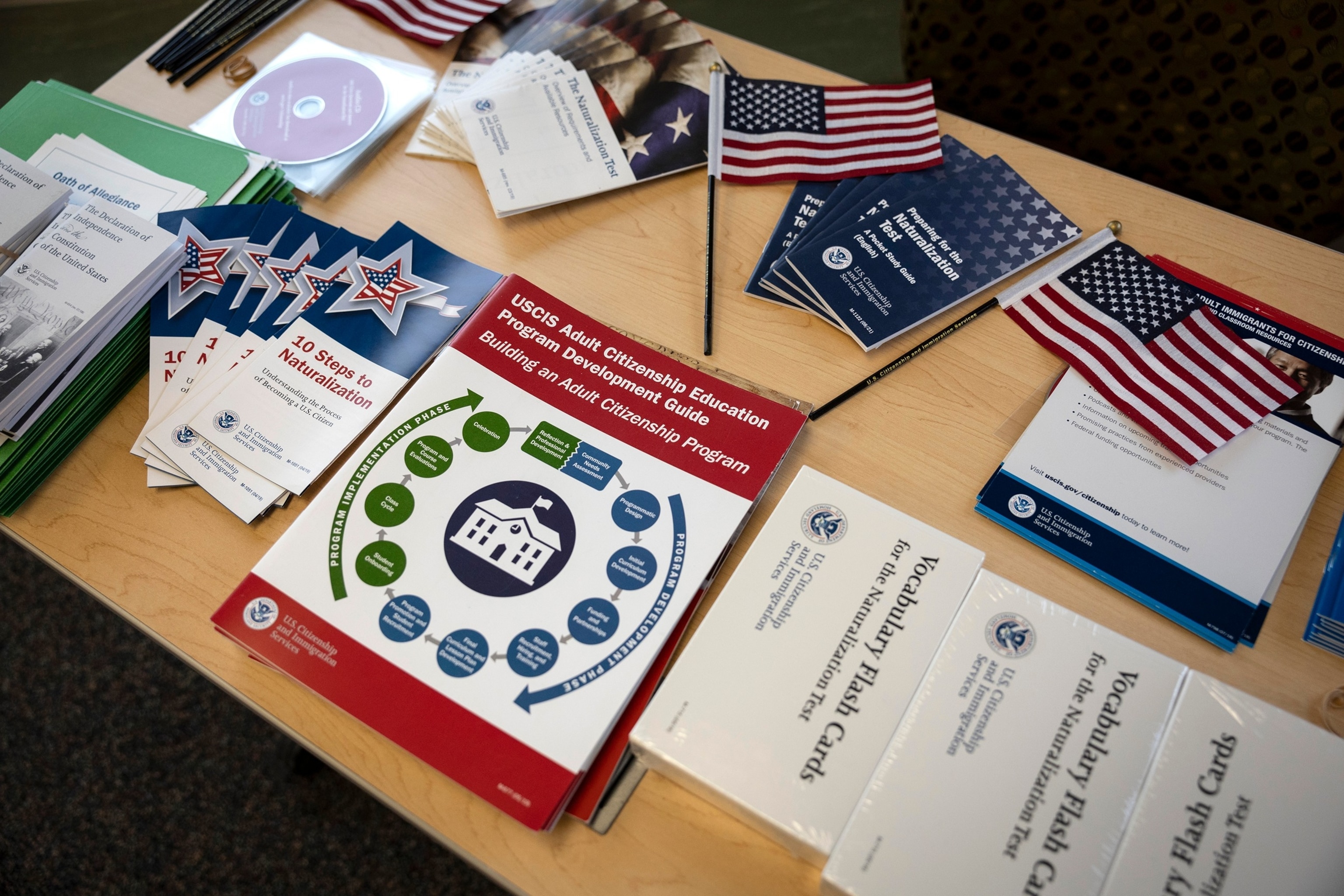
Literature from U.S. Citizenship and Immigration Services (USCIS) sits available for immigrants before their American naturalization exams, August 9, 2023 in Utqiagvik, Alaska.
John Moore/Getty Images North America
On Nov. 28, President Trump threatened to denaturalize, or strip the citizenship of “migrants who undermine domestic tranquility” in a Truth Social post.
It’s the latest move the administration has threatened as they continue to crack down on not only undocumented immigrants, but those who are here legally as well. Earlier this month, an administration official told ABC News USCIS field officers were directed to refer up to 200 cases each month for potential denaturalizations, but the official said the guidance may change.
Attorney Josh Goldstein says there may be some legal recourse for people waiting to hear back if their citizenship application was approved after they’ve already interviewed with USCIS.
Under current policies, the government typically has 120 days to make a decision. If that time period expires without a decision, applicants may be able to petition for a federal judge to move the process along or, as in the case of a client of his in 2008, swear them in on the spot.
Goldstein believes the administration’s policy of canceling ceremonies for immigrants who have already been told they’ve been approved is likely to be challenged in court.
“It’d be like if you were running a race and you’re about to win the race, and you get great up to the finish line, and then they cancel the race,” he said.
Attorney Mo Goldman’s client, Raouf, who was born in Iran and became an Austrian national and wishes to be identified by his first name, has been a lawful permanent resident since 2020 and was scheduled to take the oath in December, Goldman said. However, four days before the ceremony, he received an email saying it had been canceled.
“He told me his mom had bought a dress and his family was going to go support him and go out for a nice meal after,” Goldman said. “Imagine any U.S. citizen having this occur to them, they would go crazy.”
Raouf’s green card is still valid for another five years, which gives Goldman some relief, he says. In a statement to ABC News, Raouf said he will “remain patient.”
“Nothing would make me more proud than to become a U.S. citizen. I hope it will happen soon and will remain patient while we work through these difficult times. While I’m disappointed with what occurred the week of December 1, I know that I will someday become a citizen,” he said.
About the Author