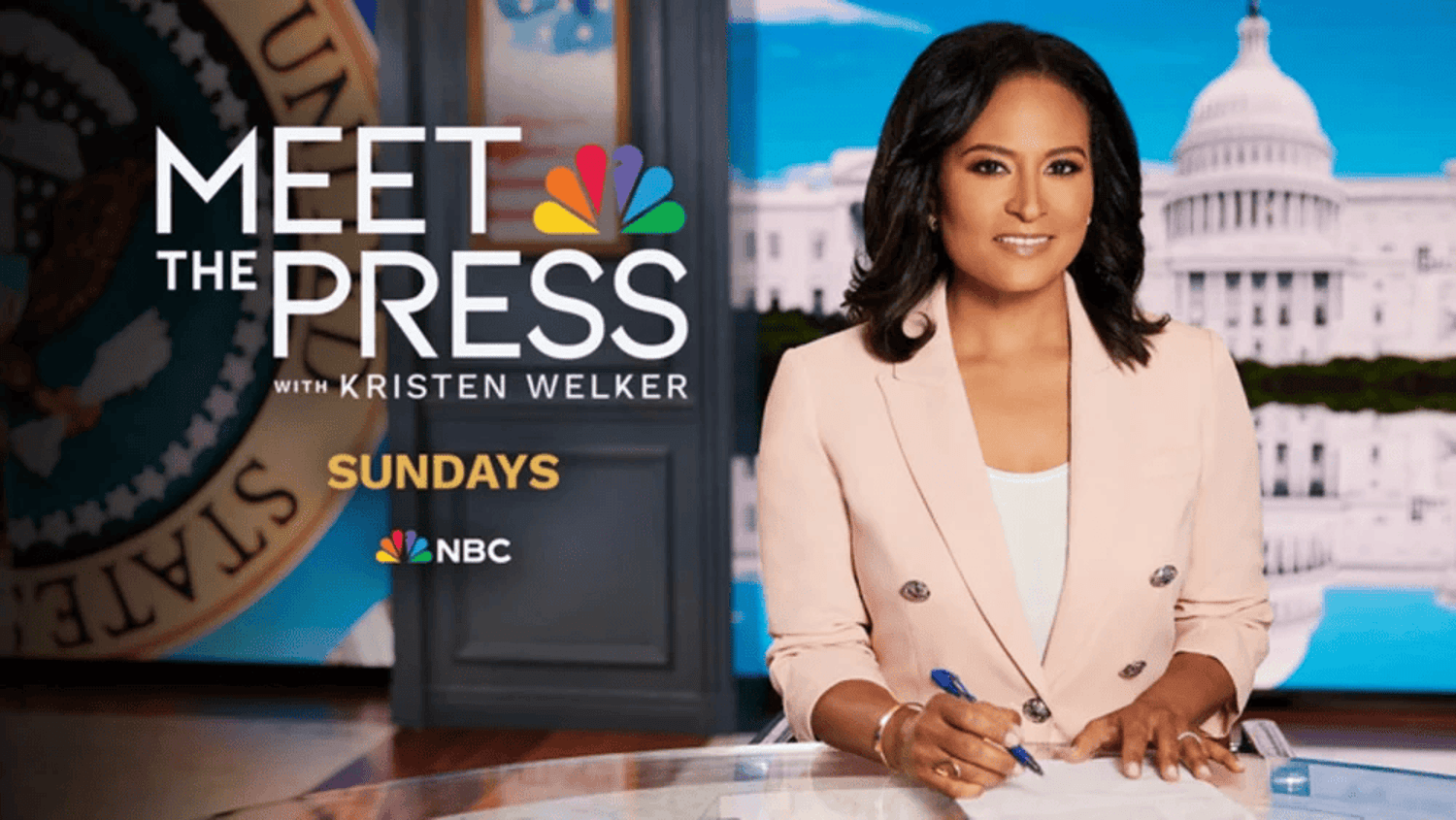
KRISTEN WELKER:
This Sunday: Captured. U.S. special operation forces launch an attack in Venezuela, capturing President Nicolás Maduro and his wife, flying them out of the country and charging Maduro with drug trafficking crimes.
PRES. DONALD TRUMP:
We are going to run the country until such time as we can do a safe, proper and judicious transition.
SEC. PETE HEGSETH:
This is America first.
SEC. MARCO RUBIO:
Don’t play games when this president is in office because it’s not going to turn out well.
KRISTEN WELKER:
What happens next?
PRES. DONALD TRUMP:
We’re not afraid of boots on the ground.
KRISTEN WELKER:
Why didn’t the president get authorization from Congress?
PRES. DONALD TRUMP:
Make Venezuela great again.
KRISTEN WELKER:
And how does this fit with President Trump’s “America First” agenda?
PRES. DONALD TRUMP:
We’re in the oil business. We’re going to sell it to them.
KRISTEN WELKER:
My guests this morning: Secretary of State Marco Rubio, House Democratic Leader Hakeem Jeffries of New York and Republican Congresswoman Marjorie Taylor Greene of Georgia. Joining me for insight and analysis are: NBC News Chief International Correspondent Keir Simmons; Amna Nawaz, co-anchor of PBS Newshour; Marc Short, former director of legislative affairs to President Trump; and Neera Tanden, president of the Center for American Progress. Welcome to Sunday, it’s Meet the Press.
ANNOUNCER:
From NBC News in Washington, the longest-running show in television history, this is Meet the Press with Kristen Welker.
KRISTEN WELKER:
Good Sunday morning. We begin with the extraordinary breaking news out of Venezuela. The country’s leader Nicolás Maduro now sits in a detention center in Brooklyn, New York after being captured by U.S. special forces. It was an operation that President Trump and his national security team oversaw in the early morning hours Saturday. It came after months of preparation, weeks of waiting for the right conditions to be met, and hours of high-risk covert operations that left several service members injured but no U.S. fatalities. President Trump now says the U.S. will “run” Venezuela until there’s a “proper transition” and not ruling out putting boots on the ground. Congress was not briefed before the military operation and is now demanding answers. Joining me now is Secretary of State Marco Rubio. Secretary Rubio, welcome back to Meet the Press.
SEC. MARCO RUBIO:
Thank you.
KRISTEN WELKER:
Thank you so much for being here. I want to start with this big picture question: Is the United States now at war with Venezuela?
SEC. MARCO RUBIO:
There’s not a war. I mean, we are at war against drug trafficking organizations, not a war against Venezuela. We are enforcing American laws with regards to oil sanctions. We have sanctioned entities. We go to court. We get a warrant. We seize those boats with oil. And that will continue. And we will continue to reserve the right to take strikes against drug boats that are bringing drugs towards the United States that are being operated by transnational criminal organizations including the Cartel de los Soles. Of course their leader, the leader of that cartel, is now in U.S. custody and facing U.S. justice in the Southern District of New York. And that’s Nicolás Maduro. So we made a big progress in that regard.
KRISTEN WELKER:
Mr. Secretary, who is in charge? Are you running Venezuela right now?
SEC. MARCO RUBIO:
Yeah, I mean, I keep people, you know, fixating on that. Here’s the bottom line on it. We expect to see changes in Venezuela, changes of all kinds, long-term, short-term – we’d love to see all kinds of changes. But the most immediate changes are the ones that are in the national interest of the United States. That’s why we’re involved here because of how it applies, it has a direct impact on the United States. We are not going to be able to allow in our hemisphere a country that becomes a crossroads for the activities of all of our adversaries around the world. We just can’t allow it. We can’t have a country where the people in charge of its military and in charge of its police department are openly cooperating with drug trafficking organizations. We can’t. We’re not going to allow that. These things are direct threats to the United States. And we intend to use every element of leverage that we have to ensure that that changes. The one I would point everyone to is that our military is helping the Coast Guard conduct a law enforcement function which is not just the capture of Maduro, but the enforcement of our sanctions. We go to court. We get a warrant. We seize the boat. And we think this is tremendous leverage, incredible crippling leverage, which we intend to continue to use until we see the changes that we need to see that are benefit to the American people, and by the way we believe for the people of Venezuela as well.
KRISTEN WELKER:
But Mr. Secretary, I think there’s a lot of questions about who the point people are during this transition. President Trump said, “We’re going to run the country.” So is it you? Is it Secretary Hegseth? Who are those people who will be running the country specifically?
SEC. MARCO RUBIO:
Well, it’s running policy, the policy with regards to this. We want Venezuela to move in a certain direction because not only do we think it’s good for the people of Venezuela, it’s in our national interest. It either touches on something that’s a threat to our national security, or touches on something that’s either beneficial or harmful to our —
KRISTEN WELKER:
And are you involved in that transition, Secretary —
SEC. MARCO RUBIO:
So obviously I’m very involved in this – well, of course. I mean, I think everyone knows I’m pretty involved on politics in this hemisphere obviously as Secretary of State and National Security Advisor, very involved in all these elements. The Department of War plays a very important role here along with the Department of Justice, for example, because they’re the ones that have to go to court. So this is a team effort by the entire national security apparatus of our country. But it is running this policy. And the goal of the policy is to see changes in Venezuela that are beneficial to the United States first and foremost, because that’s who we work for, but also we believe beneficial for the people of Venezuela who have suffered tremendously. We want a better future for Venezuela. And we think a better future for the people of Venezuela also is stabilizing for the region and makes the neighborhood we live in a much better and safer place.
KRISTEN WELKER:
President Trump said the administration is working with Maduro’s vice president Delcy Rodriguez. Why does the administration oppose working with the opposition leader, María Corina Machado? She’s a Nobel Peace Prize winner, of course, as well. Her coalition has the support of 70% of Venezuelans. Why not work with her?
SEC. MARCO RUBIO:
Well, a couple of things. So first of all, María Corina Machado’s fantastic. And she’s someone I’ve known for a very long time, and that whole movement is. We are dealing with the immediate reality. The immediate reality is that unfortunately and sadly, but unfortunately the vast majority of the opposition is no longer present inside of Venezuela. We have short-term things that have to be addressed right away. We all wish to see a bright future for Venezuela, a transition to democracy. All these things are great. And we all want to see that. I’ve worked on that for 15 years on a personal level both in the Senate and now as National Security Advisor and Secretary of State. These are things I still care about. We still care about. But what we’re talking about is what happens over the next two, three weeks, two, three months and how that ties to the national interests of the United States. And so we expect to see more compliance and cooperation that we were previously receiving. With Nicholas Maduro you could not make a deal or an arrangement, although he by the way was given very generous offers. He could have left Venezuela as recently as, you know, a week and a half ago. There were opportunities available for him to avoid all of this because he’s not someone we can work with. He suckered the Biden administration into stupid deals. He’s made a career out of not keeping deals and figuring out how to save himself by buying time. And President Trump was not going to fall into that trap. So now there are other people in charge of the military and police apparatus there. They’re going to have to decide now what direction they want to go. And we hope they will choose a different direction than the one Nicolás Maduro picked. Ultimately we hope this leads to a holistic transition all the way around in Venezuela, societal, political, all of that – we’re in favor of all of that. But right now, we have to take the first step. And the first steps are securing what’s in the national interest of the United States and also beneficial for the people of Venezuela. And those are the things that we’re focused on right now. No more drug trafficking. No more Iran Hezbollah presence there. And no more using the oil industry to enrich all our adversaries around the world and not benefiting the people of Venezuela or frankly benefiting the United States and the region.
KRISTEN WELKER:
You talk about a holistic transition. I think there’s a lot of focus on potential elections. How soon will elections be held, within 30 days, Mr. Secretary?
SEC. MARCO RUBIO:
Elections? Well, this is a country that’s been governed by this regime now for 14 or 15 years. The elections should have happened a long time ago. The elections did happen. They lost them and they didn’t count the votes or they refused to count the votes. And everyone knows this. So all of that I think is premature at this point. But there’s a lot of work to be done here. Let’s be realistic here. What we are focused on right now is all of the problems we had when Maduro was there, we still have those problems in terms of them needing to be addressed. We are going to give people an opportunity to address those challenges and those problems. Until they address it, they will continue to face this oil quarantine. They will continue to face pressure from the United States. We will continue to target drug boats if they try to run towards the United States. We will continue to seize the boats that are sanctioned with court orders. We will continue to do that and potentially other things until the things we need to see addressed are addressed. Because ultimately above everything else, we care about elections, we care about democracy. We care about all of that. But the number one thing we care about is the safety, security, well-being and prosperity of the United States. And that’s what we’re going to focus first and foremost here. And that’s what these changes we need to see made are about.
KRISTEN WELKER:
Okay, significant there: You say you will continue to seize boats when necessary. I want to ask you about boots on the ground. A lot of attention on that. The president was asked about the possibility of U.S. boots on the ground. He said, quote, “We’re not afraid of it.” How many U.S. forces are on the ground right now in Venezuela? Are there any?
SEC. MARCO RUBIO:
We don’t have U.S. forces on the ground in Venezuela. No, we don’t have U.S. forces on the ground. Everyone knows they were on the ground for about two hours when they went to capture Maduro. And I think what the president’s saying is very simple. And that is as president of the United States, he is not going to go around telling people what he’s not going to do. He’s not going to go around saying, “I won’t do this. I won’t do that. Yes, I care about this issue, but I’ll only go so far.” He retains all this optionality. In the particular case he was citing, this was in essence at its core, a law enforcement function, okay? The Department of Justice, dating back in the Biden administration had a $25 million reward for his capture. And so we have a reward for his capture, but we’re not going to enforce it? That’s the difference between President Trump and everybody else. It’s easy to make a wanted poster and say, “$50 million for the capture of Maduro.” But no one takes that seriously because you’re not going to anything about it. President Trump did something about it.
KRISTEN WELKER:
Let me ask you —
SEC. MARCO RUBIO:
He did something about it. We went in. We grabbed him. He was arrested. And he’s now in New York. No Americans were killed. No equipment was lost. It had to be done. And it’s been done. And I assure you the people left behind in Venezuela now that are in charge of the police and everything else, I assure you they’re going to probably be a lot more compliant than, than Maduro was as a result of this.
KRISTEN WELKER:
Well, President Trump told the New York Post there won’t be troops in Venezuela as long as Delcy Rodríguez, quote, “does what we want.” She’s already, though, demanding the release of Nicolás Maduro, as you know. She’s insisting that her country never become a colony. What exactly does Rodríguez need to do to keep U.S. troops out of Venezuela?
SEC. MARCO RUBIO:
Well, forget about the U.S. troops portion of it. What needs to happen for any of this to change for our relations with Venezuela and our whole approach with the change, those things we have talked about are the ones I’ve highlighted already. You can’t flood this country with gang members. You can’t flood this country with drugs that are coming out of Colombia through Venezuela with the cooperation of elements of your security forces. You can’t turn Venezuela into the operating hub for Iran, for Russia, for Hezbollah, for China, for the Chi — Cuban intelligence agents that control that country. That cannot continue. Those things cannot continue to be in place. You cannot continue to have the largest oil reserves, you know, in the world under the control of adversaries of the United States not benefiting the people of Venezuela and stolen by a handful of oligarchs around the world including inside of Venezuela, but not benefiting the people of that country. You know, we’ve seen how our adversaries all over the world are exploiting and extracting resources from Africa, from every other country. They’re not going to do it in the Western Hemisphere.
KRISTEN WELKER:
Yeah.
SEC. MARCO RUBIO:
They are not. That is not going to happen under President Trump. Read our national security strategy. He is serious about it. And he’s going to do something about it. And we’re doing something about it.
KRISTEN WELKER:
Let me ask you about oil. The president says the U.S. is taking over the oil. The question is, I guess, if the purpose of the operation was to capture Maduro and bring him to justice, why does the United States need to take over the Venezuelan oil industry?
SEC. MARCO RUBIO:
Well, we don’t need to. First of all, let me go – back up. We don’t need Venezuela’s oil. We have plenty of oil in the United States. What we’re not going to allow is for the oil industry in Venezuela to be controlled by adversaries of the United States. You have to understand: why does China need their oil? Why does Russia need their oil? Why does Iran need their oil? They’re not even in this continent. This is the Western Hemisphere. This is where we live. And we’re not going to allow the Western Hemisphere to be a base of operations for adversaries, competitors, and rivals of the United States, simple as that —
KRISTEN WELKER:
Have specific oil companies —
SEC. MARCO RUBIO:
We also want to see that oil and the proceeds from it — hold on. We want to see the oil proceeds of that country benefit the people of Venezuela. Why have 8 million people left Venezuela? Eight million, the single largest mass migration probably in modern history, left Venezuela since 2014? Because all the wealth of that country was stolen to the benefit of Maduro and his cronies and the regime, but not to the benefit of people of Venezuela. You know how destabilizing 8 million migrants is? The number one fear that Brazil has, that Colombia has, that all these countries in the region have about what’s happening in Venezuela and our involvement is they’re afraid of another mass migration event. That’s what they fear. This is deeply destabilizing stuff. It’s not going to continue to happen. They are not going to come from outside of our hemisphere, destabilize our region in our own back yard, and us have to pay the price for it. Not under President Trump.
KRISTEN WELKER:
Let’s talk big picture here. U.S. regime change, historically speaking has not gone very well for the United States, in Iraq, in Libya, to name a few examples. Can you assure Americans, the people of the United States, that this time will be different?
SEC. MARCO RUBIO:
Well, here’s what’s happened. We’ve got this phobia built up in this sort of thing – number one, most of the experts that people have, I’ll tell you. I watch these experts and it’s clown hour, okay? These are people that have focused their entire career on the Middle East or some other part of the world because that’s where the action was. Hey, very few of them know anything about Venezuela or the Western Hemisphere. Venezuela looks nothing like Libya. It looks nothing like Iraq. It looks nothing like Afghanistan. It looks nothing like the Middle East other than the Iranian agents that are running through there plotting against America, okay? These are Western countries with long traditions, on a people to people and cultural level, and ties to the United States. So there’s nothing like that. So I think people need to stop ascribing apples and oranges here. The apples of the Middle East or the oranges of the Western Hemisphere.
KRISTEN WELKER:
But do you —
SEC. MARCO RUBIO:
Number two, this is about the national interest of the United States. And what I’m confident of is we are in a safer and better place because we’re taking it seriously. The alternative would have been to leave Maduro there as an indicted drug trafficker, illegitimate president, running the country, open invitation for all of our adversaries to do whatever they want against the United States from Venezuela. That was not going to continue. What the alternative would have been to allow a drug trafficker to continue to use national territory and elements of nation-state power to further drug trafficking organizations. Read the indictment. This guy used the levers of their security apparatus not to arrest drug traffickers, but to cooperate and facilitate the trafficking of drugs for the purpose of getting them into the United States.
KRISTEN WELKER:
And —
SEC. MARCO RUBIO:
That’s going to stop.
KRISTEN WELKER:
And yet, Mr. Secretary, a month ago President Trump pardoned the former president of Honduras who was just starting a 45-year sentence for trafficking more than 500 tons of cocaine. Does that not undercut the administration’s stated goal as you just said to go after these narco-terrorists?
SEC. MARCO RUBIO:
Number one, the former president of Honduras. So this is not someone who was in power, had any influence on the politics of Honduras any longer. Number two, I don’t do the pardon file. I’m not against it or for it. I just didn’t review the file. So I can’t speak to you about the dynamics that led the president to make the decision that he made. I think he talked about yesterday at the press conference. He reviewed the file. He went through the arguments in it. And he felt that the former president of Honduras was treated very unfairly by the previous administration and made the decision that he made. But I think the answer, whether you agree with that decision or not, people can disagree. I mean, there’s people out there who make a living out of disagreeing with anything President Trump does. That doesn’t mean you leave Maduro in place. That doesn’t mean you don’t go after Maduro. That’s not the answer. I see people saying that. It’s like, “Well, you know, how can you go after Maduro if you didn’t do this?” That’s absurd. The answer to that, whether you have a problem with it or not, is not to leave in place someone who’s been indicted, who hasn’t even faced American justice yet, but now will.
KRISTEN WELKER:
Yes, and you’re absolutely right. I was referencing obviously the former president. White House Chief of Staff, Susie Wiles told Vanity Fair that an attack on Venezuela’s mainland would require approval from Congress. Why didn’t that happen? And will it happen with any future action the administration plans to take in Venezuela or elsewhere?
SEC. MARCO RUBIO:
This was not an action that required congressional approval. In fact, it couldn’t require congressional approval because this was not an invasion. This was not an extended military operation. This was a very precise operation that involved a couple of hours of action. It was a very delicate operation too. It was one that required all these conditions to be in place at the right time and the right place. You couldn’t afford leaks. We couldn’t afford anything out there that would have endangered the mission and gotten people killed or killed off the mission and the optionality. We didn’t even know if the mission was going to happen. And how can you notify something you’re not even sure if it can happen? Because in order for it to happen, you needed to have weather conditions in place. He needed to be at the right place at the right time. We needed to have forces prepared to go. There were a lot of factors in place. It was a trigger-based operation.
KRISTEN WELKER:
But —
SEC. MARCO RUBIO:
You can’t notify that, number one, because you don’t even know if it’s going to happen if those will ever align —
KRISTEN WELKER:
But —
SEC. MARCO RUBIO:
And number two, you can’t risk it being disclosed. But this was not an attack on Venezuela. This was a law enforcement function to capture an indicted drug trafficker. And of course we needed the Department of War to support it because they do have anti-aircraft missiles that could shoot down those helicopters–
KRISTEN WELKER:
But will you —
SEC. MARCO RUBIO:
We had to take down radars. We had to take down those anti-air elements on the way in and on the way out. And that’s what this was limited to.
KRISTEN WELKER:
But will you seek congressional approval for any further action in Venezuela or the region?
SEC. MARCO RUBIO:
Well, we will seek congressional approval for actions that require congressional approval. But otherwise, they will get congressional notification. And this was not an operation that required congressional approval. In fact, this was an operation akin to what virtually every single president for the last 40 years has conducted.
KRISTEN WELKER:
Is the —
SEC. MARCO RUBIO:
The difference is that when it’s Donald Trump, you know, all these Democrats go bonkers.
KRISTEN WELKER:
Is the Cuban government the Trump administration’s next target, Mr. Secretary? Very quickly.
SEC. MARCO RUBIO:
Well, the Cuban government is a huge problem. Yes, the Cuban government is a huge problem, first of all —
KRISTEN WELKER:
So is that a yes?
SEC. MARCO RUBIO:
– for Cuba. But I don’t think people fully appreciate– I think they’re in a lot of trouble, yes. I’m not going to talk to you about what our future steps are going to be and our policies are going to be right now in this regard. But I don’t think it’s any mystery that we are not big fans of the Cuban regime who, by the way, are the ones that were propping up Maduro. His entire internal security force, his internal security apparatus, is entirely controlled by Cubans. One of the untold stories here is how in essence, you talk about colonization, because I think you said Delcy Rodriguez mentioned that.
KRISTEN WELKER:
Yes.
SEC. MARCO RUBIO:
The ones who have sort of colonized, at least inside the regime, are Cubans. It was Cubans that guarded Maduro. He was not guarded by Venezuelan bodyguards. He had Cuban bodyguards. In terms of their internal intelligence, who spies on who inside to make sure there are no traitors, those are all Cubans.
KRISTEN WELKER:
All right, Secretary of State Marco Rubio, thank you for joining us after an incredibly busy–
SEC. MARCO RUBIO:
Thank you —
KRISTEN WELKER:
– 48 hours. Really appreciate it. When we come back, House Democratic Leader Hakeem Jeffries joins me next.
KRISTEN WELKER:
Welcome back. And joining me now is House Democratic Leader, Hakeem Jeffries of New York. Leader Jeffries, welcome back to Meet the Press.
REP. HAKEEM JEFFRIES
Good morning.
KRISTEN WELKER:
Good morning. Thank you for being here. We obviously have to start with the capture and indictment of Venezuelan President Nicolás Maduro. You have called him a “criminal and authoritarian dictator who has oppressed the people of Venezuela for years.” Is Venezuela better off without Nicolás Maduro in power?
REP. HAKEEM JEFFRIES:
Well, he’s a bad guy, of course, and he’s going to stand trial in an American court of law. At this particular point in time it remains to be seen whether the people of Venezuela are going to be better off. Donald Trump claims that he’s going to run Venezuela. He’s done a terrible job running the United States of America. Life hasn’t gotten better for the American people over the last year; life has gotten worse. He promised to lower the high cost of living. Costs haven’t gone down. They’ve gone up. The health care system is broken. Donald Trump refuses to do anything about it to address the Republican health care crisis. So the notion that he’s going to run Venezuela and make life better for the Venezuelan people of course is belied by the facts as to what he’s done as President here in the United States of America.
KRISTEN WELKER:
Well, you just heard my conversation with Secretary Rubio. I asked him about the administration’s decision not to inform Congress ahead of this operation until President Maduro had been captured. Secretary Rubio saying this was not the kind of mission where they could’ve afforded to notify Congress. There were concerns about leaks. He made that point. President Trump made that point. Was the administration justified in this case in not briefing Congress?
REP. HAKEEM JEFFRIES:
Well, there’s been no evidence that the administration has presented to justify the actions that were taken in terms of there being an imminent threat to the health, the safety, the well-being, the national security of the American people. This was not simply a counter-narcotics operation. It was an act of war. It involved, of course, the Delta Force. And we’re thankful for the precision by which they executed the operation, and thankful for the fact that no American lives were lost. But this was a military action involving Delta Force, involving the Army, apparently involving thousands of troops, involving at least 150 military aircraft, perhaps involving dozens of ships off the coast of Venezuela and South America. So of course this was a military action, and pursuant to the Constitution, only Congress has the power to declare war to authorize acts that take place in this regard. And we have got to make sure, when we return to Washington D.C., that legislative action is taken to ensure that no further military steps occur absent explicit congressional approval.
KRISTEN WELKER:
All right. Well, let’s talk about when you return to Washington D.C. One of the big topics at the forefront of Congress will be, of course, the fight over these Obamacare subsidies. They expired just days ago. The House set to vote on a three-year extension of those subsidies. But as you know, Senate Major Leader John Thune has said it’s a nonstarter in the Senate. Why are you putting forward a bill that has absolutely no chance of passing the Senate?
REP. HAKEEM JEFFRIES:
Well, let’s take it one step at a time. We’ve got to make sure that a straightforward of the Affordable Care Act tax credits passes out of the House upon our return next week so we can protect the health care of tens of millions of Americans who are about to experience dramatically increased health insurance premiums, copays, and deductibles. In some instances, health insurance costs will increase by $1,000 or $2,000 per month. That’s completely and totally unacceptable. And Republicans have a responsibility to partner with us as Democrats to stop it, to protect the health care of everyday Americans, working class Americans, and middle class Americans. Now, when we successfully pass this bill out of the House of Representatives, we know that there’s a bipartisan majority in the Senate. Every single Senate Democrat and at least four Senate Republicans who support a straightforward extension of the Affordable Care Act tax credits. The votes exist to pass it in the Senate absent procedural hurdles that John Thune is erecting, because Republicans apparently have no interest in protecting the health care of everyday Americans. They’d rather protect the interests of big oil and their billionaire donors, which is why they enacted massive tax breaks as part of their One Big Ugly Bill.
KRISTEN WELKER:
Well, let me ask you. Because as you know, we are 26 days away from another potential government shutdown on the heels of the longest shutdown in U.S. history. Would you support another government shutdown over this battle over health care subsidies?
REP. HAKEEM JEFFRIES:
Well what we’ve said from the very – first of all, we need to resolve this issue within the next week or so, protect the health care of the American people, and then continue to fix our broken health care system and address the Republican health care crisis that’s devastating everyday Americans, including as a result of the fact that they enacted the largest cut to Medicaid in American history. Now, we have also said as it relates to the appropriations process that we will sit down anytime, anyplace, with anyone in order to find a bipartisan path forward to enact a spending agreement that actually makes life better for the American people. As Democrats, we’re committed to driving down the high cost of living that exists in this country. Donald Trump promised on day one of his presidency that Republicans would lower costs. Costs haven’t gone down; costs have gone up. Housing costs, out of control. Grocery costs, out of control. Utility bills, out of control. Health care costs, out of control. We’re committed to actually addressing the needs of the American people. That’s one of the problems with this action in Venezuela. How does it actually improve the quality of life of everyday Americans? How is it in America’s national security interest? Why doesn’t Donald Trump and the administration focus on dealing with the affordability crisis? That is not a hoax. It’s very real. And something meaningful needs to be done about it. That’s the Democratic commitment.
KRISTEN WELKER:
Leader Jeffries, let me ask you, because Tuesday marks the fifth anniversary of the January 6th attack on the Capitol. House Democrats are planning to hold a hearing criticizing President Trump’s decision to pardon all of the rioters. And I wonder, is there anything tangible that you anticipate coming from this hearing? Or is this hearing for show?
REP. HAKEEM JEFFRIES:
It’s a substantive hearing. It’ll be about the concerns that have been raised by people all across this country as to the fact that on his first day in office, Donald Trump pardoned hundreds of violent felons who brutally attacked the Capitol and beat police officers, more than 140 who were seriously injured – psychological and physical damage that was done, that is permanent in nature. And it was all part of Donald Trump’s effort to halt the peaceful transfer of power, which is one of the bedrocks of American democracy. We’re in our 250th year of representative government. Our democracy is not perfect, but it’s a glorious thing. And it fundamentally has to be protected and preserved. So at minimum, on this fifth anniversary of that horrific attack on the U.S. Capitol, we’re going to address issues of concern related to ensuring we continue to have free and fair elections. We’ve got to get rid of this compliant Republican Congress who function like a reckless rubber stamp for Donald Trump’s extreme agenda, as opposed to actually trying to enact policies that make life better for the American people. That’s at the essence of our democracy. And so on Tuesday, it’ll be an important hearing. We’ll hear from Americans from across the ideological spectrum about the horrors of January 6th, and why we’ve got to make sure that something like that never happens again.
KRISTEN WELKER:
All right. Very busy time in this new year on Capitol Hill. We’ll be tracking all of it. Leader Jeffries, thank you so much for joining us. We really appreciate it.
REP. HAKEEM JEFFRIES:
Thank you, and Happy New Year.
KRISTEN WELKER:
Happy New Year to you. And when we come back, Republican Congresswoman Marjorie Taylor Greene joins me next.
KRISTEN WELKER:
Welcome back, and joining me now is Republican Congresswoman Marjorie Taylor Greene of Georgia. Congresswoman, welcome to Meet the Press.
REP. MARJORIE TAYLOR GREENE:
Thanks for having me this morning.
KRISTEN WELKER:
Thank you so much for being here. We really appreciate it. Tomorrow is your last day in Congress, so incredibly significant to have you here today, Congresswoman. You and President Trump of course had an extraordinary break last year. We’ll talk all about that in just a moment, but I do want to talk about something you said this weekend in the wake of this attack against Venezuela, removing Nicolás Maduro. You said that the administration’s actions were not “America First.” Now, the president was asked about this idea yesterday. I want to play that clip and get your reaction on the other side. Take a look.
[BEGIN TAPE]
REPORTER:
Mr. President, why is running a country in South America “America First?”
PRES. DONALD TRUMP:
Well, I think it is because we want to surround ourselves with good neighbors. We want to surround ourselves with stability. We want to surround ourselves with energy. We have tremendous energy in that country. It’s very important that we protect it. We need that for ourselves. We need that for the world.
[END TAPE]
KRISTEN WELKER:
Why do you disagree, Congresswoman?
REP. MARJORIE TAYLOR GREENE:
Well, you know, I served on the Homeland Security Committee for three years. And I am overwhelmingly in support of a strong border. I impeached Secretary Mayorkas, those were my articles of impeachment that passed the House, because fentanyl overdoses skyrocketed to 280% in my own district. And the majority of American fentanyl overdoses and deaths come from Mexico. Those are the Mexican cartels that are killing Americans. And so my pushback here is if this was really about narco-terrorists and about protecting Americans from cartels and drugs being brought into America, the Trump administration would be attacking the Mexican cartels. Now, I am not defending Maduro and of course I’m happy for the people of Venezuela to be liberated. But Americans celebrated the liberation of the Iraqi people after Saddam Hussein. They celebrated the liberation of the Libyan people after Gaddafi. And this is the same Washington playbook that we are so sick and tired of that doesn’t serve the American people, but actually serves the big corporations, the banks and the oil executives. And so my pushback here is on the Trump administration that campaigned on Make America Great Again, that we thought was putting America first, I want to see domestic policy be the priority that helps Americans afford life after four disastrous years of the Biden administration. I want to see domestic policies that prioritizes jobs and affordable housing for Americans after four disastrous years of the Biden administration. And I want to see domestic priorities that put Americans first in regards of health care – health insurance costs too much – car insurance, home insurance. And these are issues that matter to Americans. We don’t consider Venezuela our neighborhood. Our neighborhood is right here in the 50 United States, not in the Southern Hemisphere.
KRISTEN WELKER:
Well, let me ask you because President Trump says he gets to decide what “America First” means. Does “America First” mean whatever President Trump says it does?
REP. MARJORIE TAYLOR GREENE:
You know, “America First” should mean what was promised on the campaign trail in 2024. So my understanding of “America First” is strictly for the American people, not for the big donors that donate to big politicians. Not for the special interests that constantly roam the halls in Washington. And not foreign countries that demand their priorities put first over Americans. “America First” actually means “for the American people.” And the American people have been put last consistently, decades and decades, by both political parties for far too long. My kids’ generation – my kids are 22, 26, and 28 – are looking at a future where this whole entire generation doesn’t think they’ll ever see a Social Security check, they don’t believe they’ll ever be able to afford to own their own home, and 50-year mortgages are really a slap in the face. It’s insulting. Americans don’t want $2,000 stimulus checks as a pay-off. They want to have good policies brought forth for them because, you want to know something, Kristen? They voted for this administration and their small-dollar donation should matter. And MAGA has its own enemy list. And the enemies of the world are not on their enemy list and they’re tired of being ignored.
KRISTEN WELKER:
Let me ask you about your break up with President Trump. Part of that was over this battle over releasing the Epstein files. In September after a meeting with a group of Epstein survivors, you held a news conference and threatened to identify some of the men who had abused them. The New York Times Magazine reported that President Trump called you into your office afterwards and, quote, “According to a staff member, everyone in the suite of rooms could hear him yelling at her as she listened to him on speaker phone. Greene says she expressed her perplexity over his intransigence. According to Greene, Trump replied, ‘My friends will get hurt.’” What do you think President Trump meant by, “My friends will get hurt,” Congresswoman?
REP. MARJORIE TAYLOR GREENE:
You know, I’ve been asking that question ever since, and I make no apologies for standing with women and victims of rape because in this country, there are far too many victims of rape. All walks of men and women alike have been victims of rape or some type of child abuse. And the Epstein files is significant, and demanding transparency for that should not lead to the president – who I helped get elected and supported far more than pretty much any Republican in Washington – it should not have led to him calling me a traitor. That is absolutely unacceptable, and the American people reject it. But here’s what should be prioritized is victims. And victims of an entire system that protected the rich, powerful elites, and that’s what Americans are absolutely sick and tired of. That was part of what they voted for in 2024. They voted to tear down the system that protects the rich, powerful elites. They voted to tear down the system that consistently goes for foreign wars and regime change. They voted to tear down the system that does nothing for regular, hardworking Americans, and only consistently props up the big banks, the military industrial complex, and the oil executives and major, major industries. And you know, you want to know something? After this regime change in Venezuela, I fear that we’re going to see jobs just move south because we’re already hearing about big corporations lining up their trips to Venezuela for the next big business opportunity that exists, while Americans sit here with no options that are going to provide them with good-paying jobs and affordable health care.
KRISTEN WELKER:
Congresswoman, let me finally ask you about one of the rifts and concerns in the Republican Party over the issue of antisemitism. In 2022, you did speak at a conference organized by Nick Fuentes. He’s a white nationalist. He recently said that Hitler is, quote, “cool.” Let me ask you about your perspective right now. Do you believe there is room in the Republican Party for Nick Fuentes and anyone who shares that ideology, that Hitler is “cool?”
REP. MARJORIE TAYLOR GREENE:
Here’s my situation and here’s my belief on people’s speech. I will always defend the First Amendment and free speech, no matter what kind of speech it is. Even speech that I find abhorrent or I disagree with, because I think that makes us uniquely American. What concerns me is that when we move towards censorship, and we saw that happen during Covid, I myself had my own Twitter account permanently banned because I spoke out against FDA rushed approval of the Covid vaccines. And I spoke out against lockdowns and forced masking. And, you know, when I look at people saying that certain types of speech needs to be censored, and we have been hearing that lately, that raises great concern for me. So I think it’s something that we have to take seriously as Americans, we don’t have to agree with each other and we certainly can disagree, but we should overwhelmingly agree that free speech must be protected.
KRISTEN WELKER:
Well, let me just, I mean, during Covid you did compare lockdowns to the Holocaust. I understand your point about free speech, but let me press you there, because Nick Fuentes has said on his podcast, quote, “Hitler was awesome. Hitler was –“
REP. MARJORIE TAYLOR GREENE:
No, that’s a misquote. Kristen, that’s a misquote. That’s a misquote.
KRISTEN WELKER:
All right.
REP. MARJORIE TAYLOR GREENE:
That’s not correct. I compared vaccine cards, being forced to take a vaccine in order to be able to keep a job or buy or sell, or be able to be admitted to restaurants. I compared that. I was not comparing. The Holocaust was horrible.
KRISTEN WELKER:
Okay.
REP. MARJORIE TAYLOR GREENE:
I’m not comparing anything to that.
KRISTEN WELKER:
Let me just ask you that, because Nick Fuentes has said on his podcast, “Hitler was awesome. Hitler was right. The Holocaust didn’t happen.” He also participated in the Charlottesville rally, where demonstrators chanted, “Jews will not replace us.” Senator Ted Cruz said, “This is a time for choosing.” He says, “If you’re embracing someone who says, ‘Hitler is cool,’ you are complicit in that evil.” Do you think Ted Cruz has a point, that you’d be complicit in that evil to support or in any way fail to denounce what Nick Fuentes has said?
REP. MARJORIE TAYLOR GREENE:
Kristen, I don’t know Nick Fuentes. I don’t even have his phone number. He doesn’t have my phone number. I spoke at a conference of his because it was largely attended by young Americans, and I care about that generation. And I went there to talk directly to them. So I really am not familiar with what Nick Fuentes says, whether it’s on social media or his podcast, nor do I pay that much attention to Ted Cruz. He routinely attacks me. But the things that I focus on is the needs of the American people.
KRISTEN WELKER:
But should he be embraced in the Republican Party, Congresswoman?
REP. MARJORIE TAYLOR GREENE:
And I’m not going to get —
KRISTEN WELKER:
Is there room for him in the Republican Party?
REP. MARJORIE TAYLOR GREENE:
Kristen, I don’t think that this is about the Republican Party, and it’s not about Nick Fuentes. I see this about free speech. And I’m going to sit here and tell you over and over again, I defend the First Amendment. I will defend free speech, whether I like the speech, agree with the speech, disagree with the speech, hate the speech, I’m going to defend it. Because I can point to many other people in the Democrat Party that I completely don’t like their speech. I can point to members of the press that have written horrific stories that I think are lies and I can say, “I don’t like that speech,” but I still defend free speech and I still defend the press having rights to publish stories, because I think that’s how you hold the government accountable. And I want a press that tells the truth to the American people, not slants it or paints it one way, but strictly publishes the truth. And that’s what Americans really want. So I’m not going to engage in weighing in on who deserves to be where. I’m going to strictly tell you I will defend free speech at all costs.
KRISTEN WELKER:
All right. Congresswoman Marjorie Taylor Greene, again, thank you for joining us right before your last day in Congress. We’ll track your political future or any future very closely. We really appreciate it. We will be right back. Stay with us.
KRISTEN WELKER:
We’ll be right back with more Meet the Press. The panel is next.
KRISTEN WELKER:
Welcome back, the panel is here. NBC News Chief International Correspondent Keir Simmons, Amna Nawaz, co-anchor of PBS NewsHour, Neera Tanden, president and CEO of the Center for American Progress, and Marc Short, former Trump director of Legislative Affairs. Welcome to all of you. Happy New Year. Keir, let me start with you. Extraordinary developments out of Venezuela. What are you watching for this week?
KEIR SIMMONS:
Absolutely stunning. I’m a foreign policy guy, right? By Marjorie Taylor-Greene’s account, I should not be this busy as we start 2026. One of my questions is, does Colin Powell’s adage count here, which is if you break it, you own it? Listening to Marco Rubio in your great interview, what I heard him say was, “We just want someone in Venezuela that we can deal with.” I didn’t hear him say when he thought there should be an election here.
KRISTEN WELKER:
Yeah.
KEIR SIMMONS:
So I think one of the questions here is where is Delcy Rodríguez, has he done a deal with her, the now-acting president, the former vice president under Maduro, is that going to work in Venezuela? And I thought Hakeem Jeffries had a strong point when he said effectively, “Let’s see what happens.” There is a huge roll of the dice here.
KRISTEN WELKER:
Yeah, there is. And to that point, Amna, are your sources telling you anything about a day-after plan?
AMNA NAWAZ:
Well, no. And I think one of the biggest questions we have right now is what is, as Marco Rubio told you, over the next two, three weeks, two, three months, what is that plan? We are on day two, post-Maduro being ousted.
KEIR SIMMONS:
Right, that’s right.
AMNA NAWAZ:
And questions abound. And I think it’s important to point out a successful mission, which this absolutely was, does not mean a successful strategy. We don’t know yet what that looks like. The Maduro regime is still in charge, without Maduro.
KRISTEN WELKER:
Yeah.
AMNA NAWAZ:
And I think that underscores a lot of the uncertainty. And when I spoke to a senior opposition leader in exile last night, they point out, as Senator Rubio, or rather Secretary Rubio did, that Venezuela is not like Iraq and Libya and Afghanistan where there was no place afterwards. There was no plan, no structure to assume leadership. They have opposition here and they believe María Corina Machado would win an election. They want to see a Democratic transition soon.
KRISTEN WELKER:
Marc, I thought it was so interesting, Congresswoman Greene very forceful, but largely the MAGA base is actually behind this move so far. Do you see that shifting? What could cause it to shift?
MARC SHORT:
No, I think this is actually a more significant achievement for the Trump administration. I think the Maduro regime, for 13 years, has been a thorn in the side for both Republican and Democratic administrations. You know, I think there’s a lot of chatter now. A lot of Democrats uniformly denouncing the president’s actions. But, you know, the indictment was from 2020. Democrats could’ve withdrawn the indictment for drug trafficking at any point. And they didn’t. They know Maduro’s been a threat, they know that preceding him, Chavez was. Eight million people have fled Venezuela because of the political persecution of this administration. And so I think this is a big achievement for President Trump and his team. And I think for those, for Marjorie Taylor-Greene, I agree with the sense that actually this does help America. Because you look at who Venezuela sided with, it’s Iran, it’s China, it’s Russia. Do you really want those people having a significant influence inside this hemisphere? And so again making sure that we are standing with those who want to have liberty again in Venezuela. I think it’s an important message.
KRISTEN WELKER:
Neera, I thought it was interesting that Leader Jeffries talked about this within the context of health care, almost made the Marjorie Taylor-Greene argument. Do you think that’s the right message here for Democrats?
NEERA TANDEN:
Absolutely. I mean, I think 20 million Americans who are going to face losing their health care, you know, people are looking at spiraling health care costs, woke up yesterday, thought, instead of the president dealing with their concerns, he was focused on Venezuela. And honestly, I think the truth of this is that, and Marco Rubio said it himself, one of the big interests, American interests, is oil in Venezuela. And I think Marjorie Taylor-Greene spoke to this as well. It’s not just Democrats, it’s people like Marjorie Taylor-Greene, saying that the quote, unquote, “American interests” here is oil in Venezuela. And I think the idea that America’s interests is defined by oil is what a lot of Americans are going to have trouble with over the next several weeks and months.
KEIR SIMMONS:
What he also said was that this is about Iran, about China, about Russia, about Cuba’s influence in Venezuela, and about – and go to the national security strategy, I mean, it sets it out, and about the U.S. asserting itself in the Western Hemisphere. I mean, I think what’s interesting is that those same countries will be watching now. And they will be wondering if this could be a quagmire for the U.S. Because that’s in their interest.
NEERA TANDEN:
Or –
MARC SHORT:
They’ll be watching, but they’ll also be saying, you know, “Well, if America can pull off something as dramatic as they did last night,” it makes them question some of the actions they’re taking too.
KEIR SIMMONS:
President Xi will be asking himself that question about Taiwan –
MARC SHORT:
Yeah.
KEIR SIMMONS:
– I think.
AMNA NAWAZ:
I think the other question about the instability ahead though, if there’s not some kind of plan or strategy from the U.S., that could mean, as Secretary Rubio said, more outmigration. I’ve been on the Venezuelan border and talked to many of the people leaving. Instability, chaos within means more people trying to leave. There’s also still American citizens being held on the ground there. They could be on a plane tomorrow if the U.S. wanted to see some confidence-building measures from this government.
NEERA TANDEN:
I mean, I think fundamentally, the fact that the Maduro regime is still there means that this really wasn’t anything else. It really just points to they’re basically saying they want a leadership there that the American government can do business with. And that again, I think points really to not an interest in democracy, not an interest in direct American interests, but oil interests. I think a lot of people are going to have concerns about that in the days and months to come.
KEIR SIMMONS:
I think U.S. allies will be asking themselves this question this morning: Does this underscore an idea that the rules are different if it’s in your region? Because that’s what President Putin says. That’s part of the China policy, although they also, at the same time, talk about international rule.
NEERA TANDEN:
I mean, Taiwan is absolutely in the neighborhood of China. How does this not strengthen China’s hands, who actually —
KEIR SIMMONS:
Well, I think Beijing may be worrying about what the Trump administration would do.
MARC SHORT:
– they’re sending a much bigger message to China, Russia, and Iran. It’s not just about oil. It’s an important message.
KRISTEN WELKER:
All right guys. Fantastic conversation. Thank you. That is all for today. Thank you for watching. We’ll be back next week, because if it’s Sunday, it’s Meet the Press.
About the Author