
Burials discovered at the Tell Kom Aziza site, in the Nile Delta in Egypt’s northern Beheira province, near the Mediterranean coast, date from about 332 B.C. to 395 A.D. Remains and artifacts found at the site show widely varying burial practices and they point to the site itself morphing over its long period of use from a settlement into a cemetery.
“This is a very important discovery because it sheds light on and reveals more details about the site,” Nevine El-Aref, media adviser to the Minister of Tourism and Antiquities, told CBS News. “It is a unique example that shows the transformation of a settlement hub into a major burial ground spanning different ancient eras.”
Egyptian Ministry of Tourism and Antiquities
Excavations revealed burial practices ranging from simple pit burials, with bodies placed directly in the ground, to graves lined with mudbricks and burials in painted plaster coffins.
There were also individual and collective burials, according to Dr. Hisham El-Leithy, Secretary General of the Supreme Council of Antiquities, and burials oriented along both north–south and east–west axes.
The hand positions of those interred also differed. Some individuals were buried with their hands folded or crossed over the pelvic region, while others were put in the “Osirian pose,” with their arms crossed over the chest, or with their arms extended and aligned alongside the thighs, El-Leithy said.
Egyptian Ministry of Tourism and Antiquities 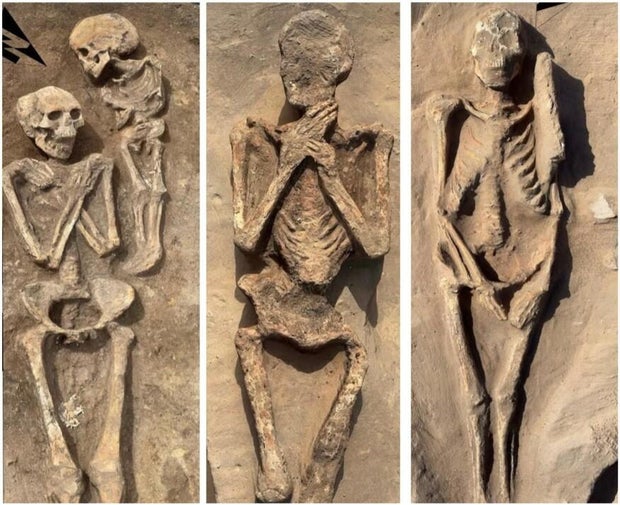
“This diversity can be interpreted in several ways: It may reflect social differences among the individuals buried, variations in ritual practices, or a limited development within the same funerary tradition,” Khaled Abdel Ghany Farhat, the head of the team, told CBS News.
Among the significant discoveries were the complete skeletal remains of two wild boars, a rare find at ancient Egyptian funerary sites. Boars were representative at the time with Seth (or Set), a deity associated with chaos and violence in ancient Egyptian mythology.
Egyptian Ministry of Tourism and Antiquities 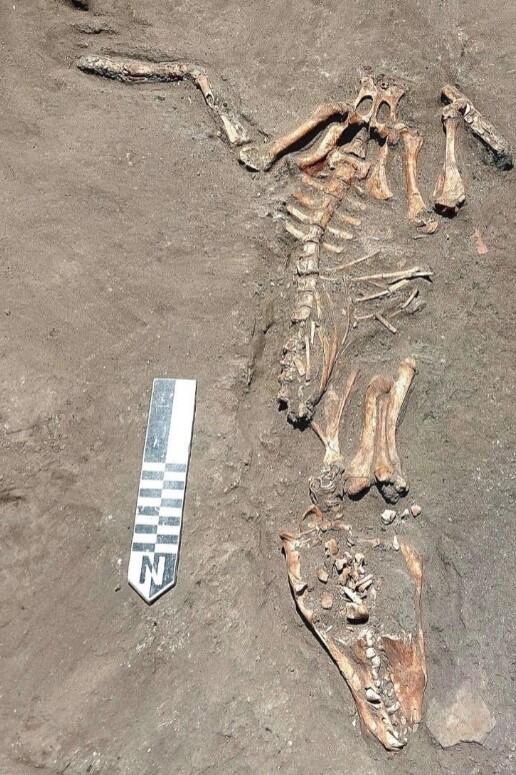
“Even though it’s not possible yet to determine with certainty whether these remains represent intentional animal burials, remnants of domestic and economic activity, or an element with ritual significance, their presence within this context requires linking the direct archaeological evidence with the cultural and religious significance of the boar in ancient Egypt,” Mohamed Abdel Badi, Head of the Egyptian Antiquities Sector, told CBS News.
Pottery fragments dating from the Egyptian Old Kingdom — the time of the great pyramids’ construction, between around 2686 and 2181 B.C. — to the Greco-Roman period that followed some 2,000 years later, were also discovered at the site.
Egyptian Ministry of Tourism and Antiquities 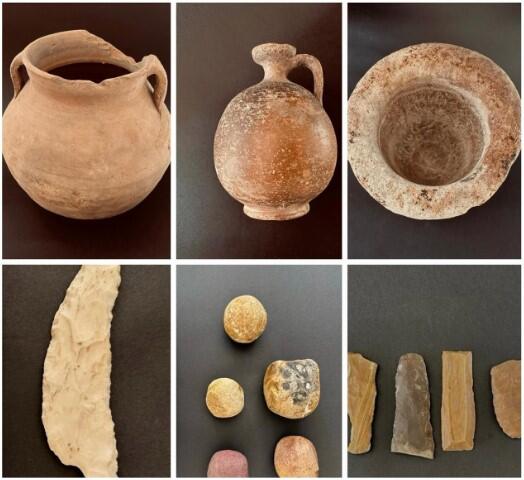
The largely domestic items, including amphorae, burial jars, bread molds and bread trays, indicate continued or repeated use of the site over not just centuries, but millenia.
“Excavation work at the site is still ongoing in order to uncover more secrets, understand the history of the location and its development over time, and put all the puzzle pieces together to decipher patterns of human activity in the area,” El-Aref, at the Ministry of Tourism and Antiquities, told CBS News.
About the Author
