“I’m here on the shores of beautiful Lake Ontario, a crown jewel of our province and our country,” Ontario Premier Doug Ford said in a short video message posted on social media.
“You may have heard that President Trump is trying to rename this lake, all because he doesn’t like Ontario and Canada standing up for ourselves,” he said. “But let’s be serious. Long before President Trump, this lake was called Lake Ontario, and long after President Trump is gone, it will still be called Lake Ontario.”
Ford added that the province put the huge blue sign to remind Mr. Trump and everyone that “it’s Lake Ontario now and forever.”
The new sign, which also says in French “Lac Ontario – Aujourd’hui et pour toujours,” is located at Fifty Point Conservation Area, a park in Hamilton, Ontario.
Amid an ongoing trade war between Canada and the United States, Mr. Trump last week sought to rename Lake Ontario “Lake America” by an executive order. He also said the U.S. doesn’t expect to be “doing much business with Ontario any longer.”
The name Ontario came from the Iroquoian word “oniatarí:io,” and means “lake of shining waters,” according to the Center for Great Lakes Literacy.
The leader of the Seneca Nation, one of the Iroquoian-speaking nations in the region, on Friday also criticized Mr. Trump’s decision to rename Lake Ontario and called for the executive order to be rescinded.
Seneca Nation President J. Conrad Seneca said the order violates a more than 225-year-old treaty and shows a “blatant disrespect” for the Indigenous people who gave it its name in the first place. He said the Lake Ontario name should remain as a reflection of the Indigenous people in the U.S. and Canada who lived in territory around and along the lake long before the creation of either nation.
Getty Images/iStockphoto 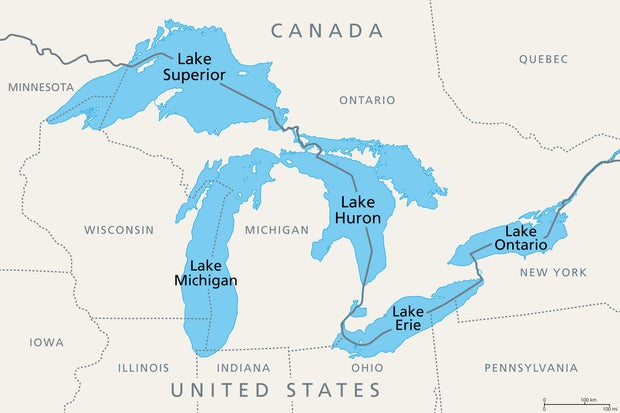
“The President cannot assert ownership over our culture or erase it through irresponsible political action,” he said in a statement.
Following failed trade talks between the two nations, the U.S. began imposing 50% tariffs on hundreds of Canadian goods. Mr. Trump also announced that the U.S. will impose a 50% tariff on all Canadian automotive and steel imports beginning in January, while claiming that “Canada has been ripping off the United States of America for years.”
Canadian Prime Minister Mark Carney then announced new retaliatory tariffs against the U.S., saying that it would impose tariffs of up to 50% on about $20 billion of U.S. imports.
About the Author
