
Two physician associate groups have sued the Trump administration over a federal rule limiting student loan borrowing for some graduate degree programs that impact healthcare professionals, including physician associates and assistants (PAs), nurse practitioners and other clinical providers.
The American Academy of Physician Associates (AAPA) and the Physician Associates Education Association (PAEA) filed a lawsuit aimed at reversing a Department of Education regulation that the plaintiffs claim violates the Administrative Procedure Act. They are separately requesting an emergency injunction that seeks to block the rule from taking effect for PA students on July 1.
The complaint also claims that the rule exceeds the Education Department’s statutory jurisdiction and is therefore unlawful. The Government Accountability Office website said the Administrative Procedure Act prescribes the minimum procedural steps an agency must follow in its administrative proceedings.
The lawsuit alleges the Education Department overstepped its legal authority by disqualifying a PA degree from being categorized as a professional degree.
The new rule entitled the Reimagining and Improving Student Education-Federal Student Loan Program (RISE) — which is based on an existing regulation — finalized the definition of “professional” and “graduate” programs, restricting student loan borrowing limits to $200,000 and $100,000 total for professional and graduate degrees respectively. The $100,000 total cost for PA students is capped at $20,500 annually.
Al Drago/Getty Images
AAPA’s CEO Lisa Gables said the rule will have “devastating consequences” for the PA workforce.
“PA programs meet every element of the professional degree definition that Congress established in law,” Gables wrote in a statement. “They award entry-level master’s degrees, require rigorous clinical training, and lead to professional licensure in all 50 states.”
She added, “We are in court to ensure the law is implemented as Congress intended.”
According to the Education Department’s final regulation, pharmacy and dentistry are among the list of eleven professional degree programs –- including medicine, law and clinical psychology degrees –- eligible for the $200,000 cap, but teaching, nursing, and physician associates are now capped at the lower limit.
The median PA program tuition is nearly $97,000 for residents before fees and additional costs, according to AAPA.
The recent move is drawing widespread concern from public service advocates as the healthcare groups stress that the federal loan limits will push many students to be dependent on private student loans, which have stricter approval requirements, unfavorable interest rates, and limited repayment plan options.
The rule would harm the associations’ ability to provide member services and advocacy and the groups’ members would also suffer “negative consequences” if PA students do not have access to the higher loan amounts that allow them to attend PA programs, according to the complaint.
Rory O’Sullivan, at D.C.-based policy think-tank Arnold Ventures, argued that loan limits should be based on degree program outcomes, not what field of study the degree is in.
Wednesday’s filing comes as 24 states and Washington, D.C., sued the administration on similar grounds in May, arguing that the rule would widen the nursing shortage because the borrowing limit would disincentivize students from entering the field.
Secretary of Education Linda McMahon defended her department’s rule at an annual budget hearing on Capitol Hill last month.
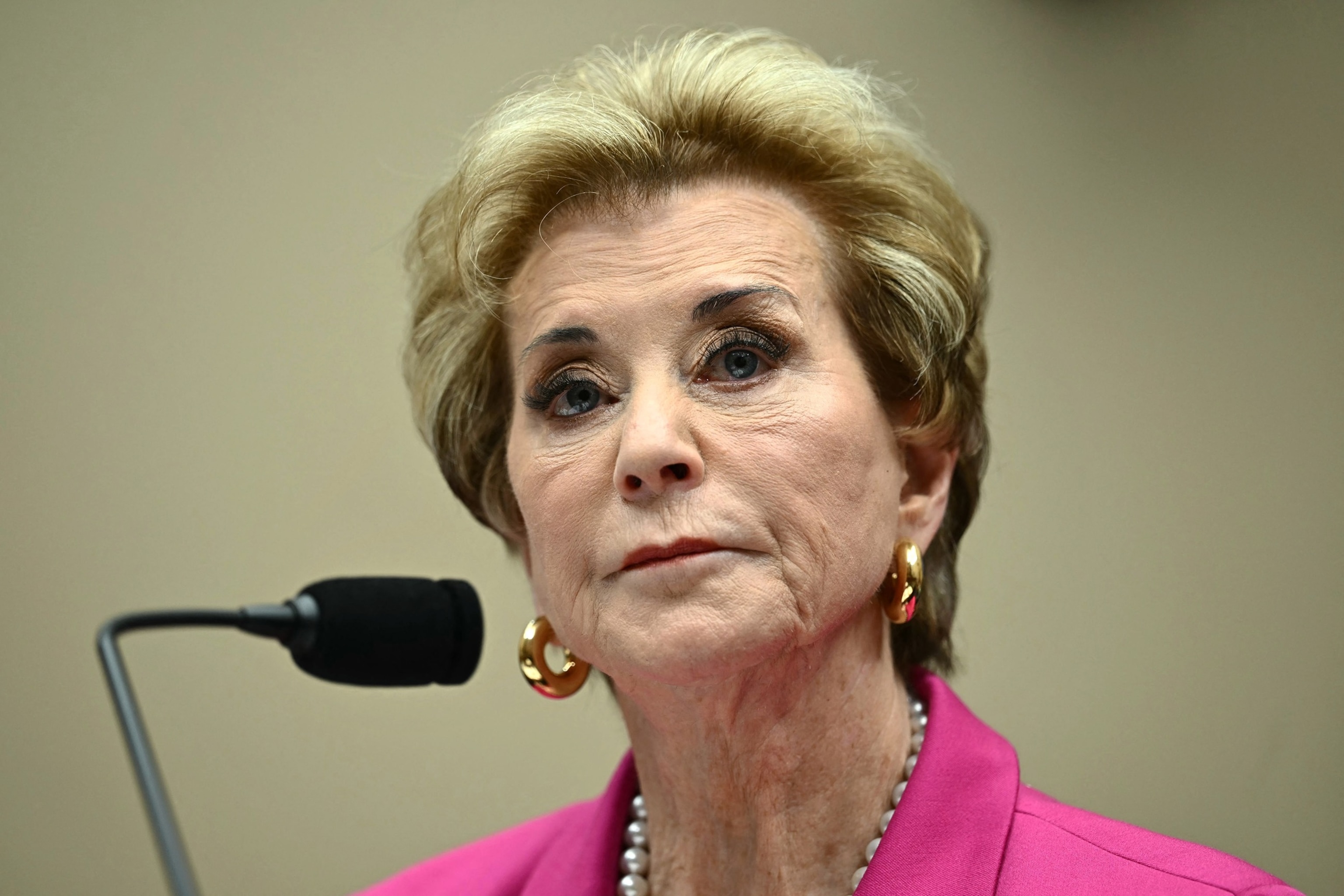
Kent Nishimura/AFP via Getty Images
“These particular programs have not been reclassified as nonprofessional,” McMahon said during the House Education committee hearing. “They were never classified as professional degrees – that just wasn’t a part of the equation.”
“There’s been no other measure that has been taken to try to bring down the cost of education,” McMahon contended.
The Department of Education emphasized that loan caps are “common sense” and place downward pressure on the cost of tuition across the country.
Ellen Keast, the press secretary for higher education at the Education Department, told ABC News in a statement, “For two decades, colleges and universities have been able to charge virtually unlimited tuition, even as many student loan borrowers see little to no return on their investment.”
“During this time, tuition has risen faster than any other household expense, and 71 percent of graduates with debt report delaying major life milestones, while institutions have taken in billions at the expense of young Americans’ financial stability,” Keast said.
She added: “The Trump Administration is working to correct this longstanding imbalance by ending a system that pushed students into debt they often could not repay and by promoting access to high quality education that serves students, not institutional bottom lines.”
‘My dream of being a PA is probably shot’
Wednesday’s complaint said the rule will burden students, like Ben Pinckney from New York, and deter them from applying to PA programs. The plaintiffs said it effectively creates scenarios where those aspiring PAs are unable to afford the cost of attendance because the vast majority of PA students need the higher loan limits authorized for the “professional student” to be able to attend PA school.
Pinckney told ABC News in an exclusive interview he has dreamed of becoming a PA for years but said he’s still struggling to find an affordable graduate school within the student loan caps. The 46-year-old recent college graduate said an emergency room PA saved his life when he was the victim of a shooting years ago and that inspired him to pursue medicine as a profession.
“Not only did he save my life in the physical, but [also with] the conversations we used to have,” Pinckney told ABC News, adding “My mentality and my way of thinking changed because of the PA.”
Pinckney, who later served in the U.S. Army as a combat medic, said he voted for President Donald Trump in 2024 but believes the Trump administration’s rule is “hurting both sides” by making the PA degree harder to obtain.
“It’s less about politics and more about helping providers or potential providers get the schooling they need, so that we can go into the communities that we want to go into and help those people,” Pinckney said.
PAs treat patients under the supervision of a physician in healthcare settings, including hospitals, doctors’ offices, and outpatient clinics, according to the Bureau of Labor Statistics. Advocates stress that the department’s decision could strain critical patient care access and the majority of students pursuing PA degrees, who will comprise a significant share of the nation’s healthcare workforce over the next decade.
Pinckney said it’s heartbreaking because his goal of becoming a healthcare provider – within an already overburdened healthcare system – remains in limbo. “If nothing changes, then my dream of being a PA is probably shot,” Pinckney said. “If nothing is done short of someone giving me, you know, a huge grant or scholarship, then this chapter for me is over,” he later added.
About the Author
