Several high-profile primary races Tuesday tested how much President Donald Trump’s endorsement can do for a scandal-marred candidate, showed the impact of Republicans’ mid-decade redistricting and highlighted the continued battle between established Democratic candidates and progressive challengers.
Here are takeaways from Tuesday’s primaries:
Francis Chung/Politico/AP
Trump endorsement can’t lift Mills
Embattled and scandal-ridden Republican Rep. Cory Mills lost his reelection bid in Florida Tuesday, defeated by challenger Ryan Elijah, a former TV news anchor and NFL sideline reporter.
Mills faces a House Ethics Committee investigation; a judge issued a restraining order against him last year after he was accused by his former girlfriend of threatening to distribute sexually explicit videos of her; and in July, ABC News reported that the embattled congressman was also under investigation by the Department of Justice, in part about his finances. Mills has denied the allegations.
Mills’ loss suggests that Republicans have limits when it comes to how long they can stand behind a candidate carrying too much baggage. Despite the scandals that have followed him, Mills still retained Trump’s endorsement.

John Raoux/AP Photo
Putting aside differences before November
Republican Rep. Byron Donalds unsurprisingly secured his party’s nomination in the gubernatorial race in Florida. Donalds’ campaign has received immense support among Republicans and Trump’s endorsement.
Donalds now faces the task of uniting his party after what was a bruising primary. Donalds said he received congratulatory calls from his competitors, Paul Renner and James Fishback. In his victory speech, Donalds called for Florida Republicans to come together.
“But tonight the primary is over. Tonight we put aside our differences. Tonight we are one united Republican Party,” Donalds said.
Joe Raedle/Getty Images
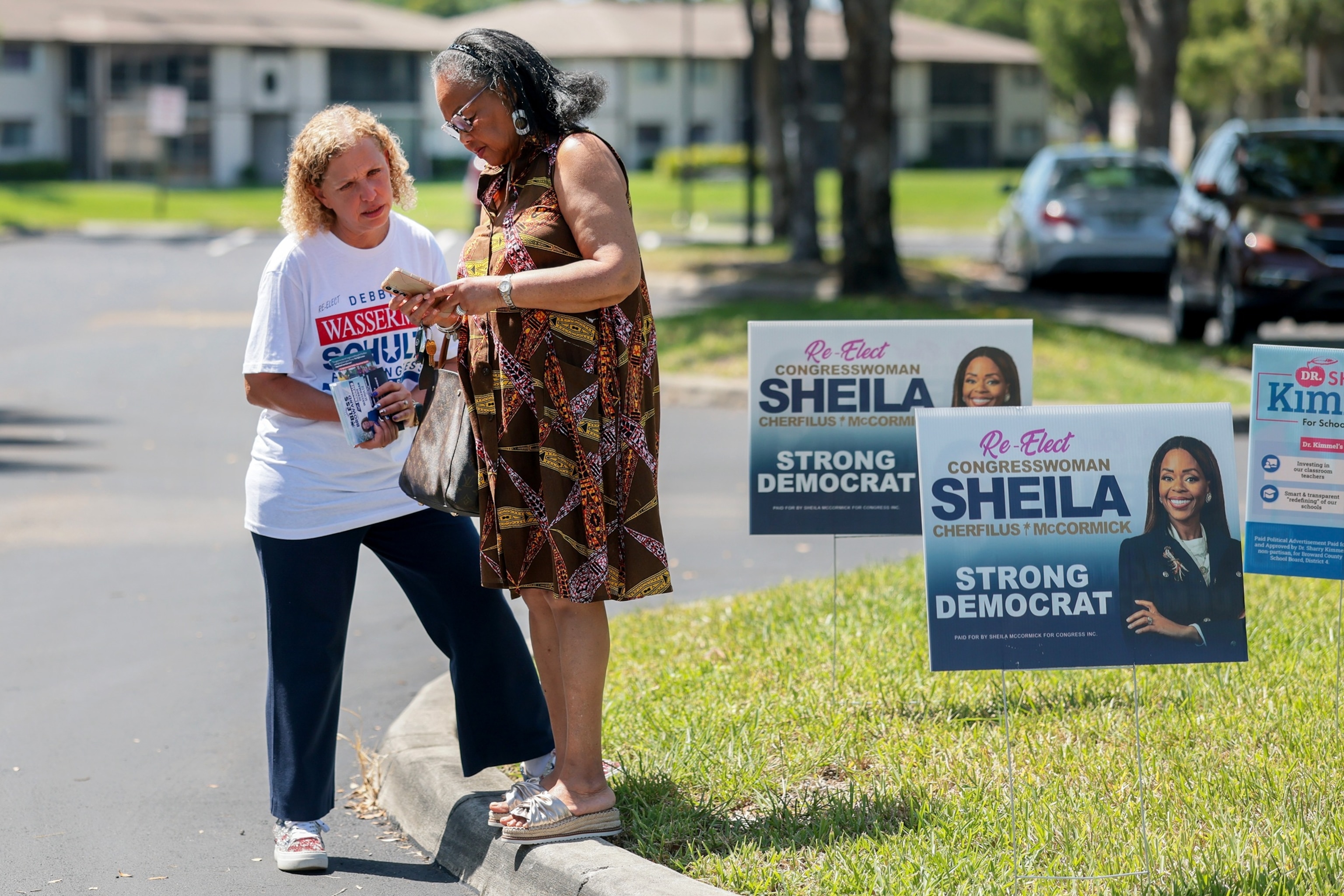
Wasserman Schultz promises representation matters
Democratic Rep. Debbie Wasserman Schultz won her primary in Florida’s historically Black 20th Congressional District that was redrawn this year by the Republican-controlled legislature.
Her decision to run in the district drew criticism from her four Black opponents and other Black Democrats who have already been impacted by Republican redistricting efforts in southern states.
In her victory speech, Wasserman Schultz referenced redistricting Republicans hope will improve their chances of retaining the House in November. She promised the redrawn majority-minority district that increasing representation is among her top priorities.
“This is such a difficult and fraught time in our country. There is so much at stake in this moment, and I want people to know that representation matters. It matters, and I will fight to make sure that representation counts again,” she said Tuesday evening.
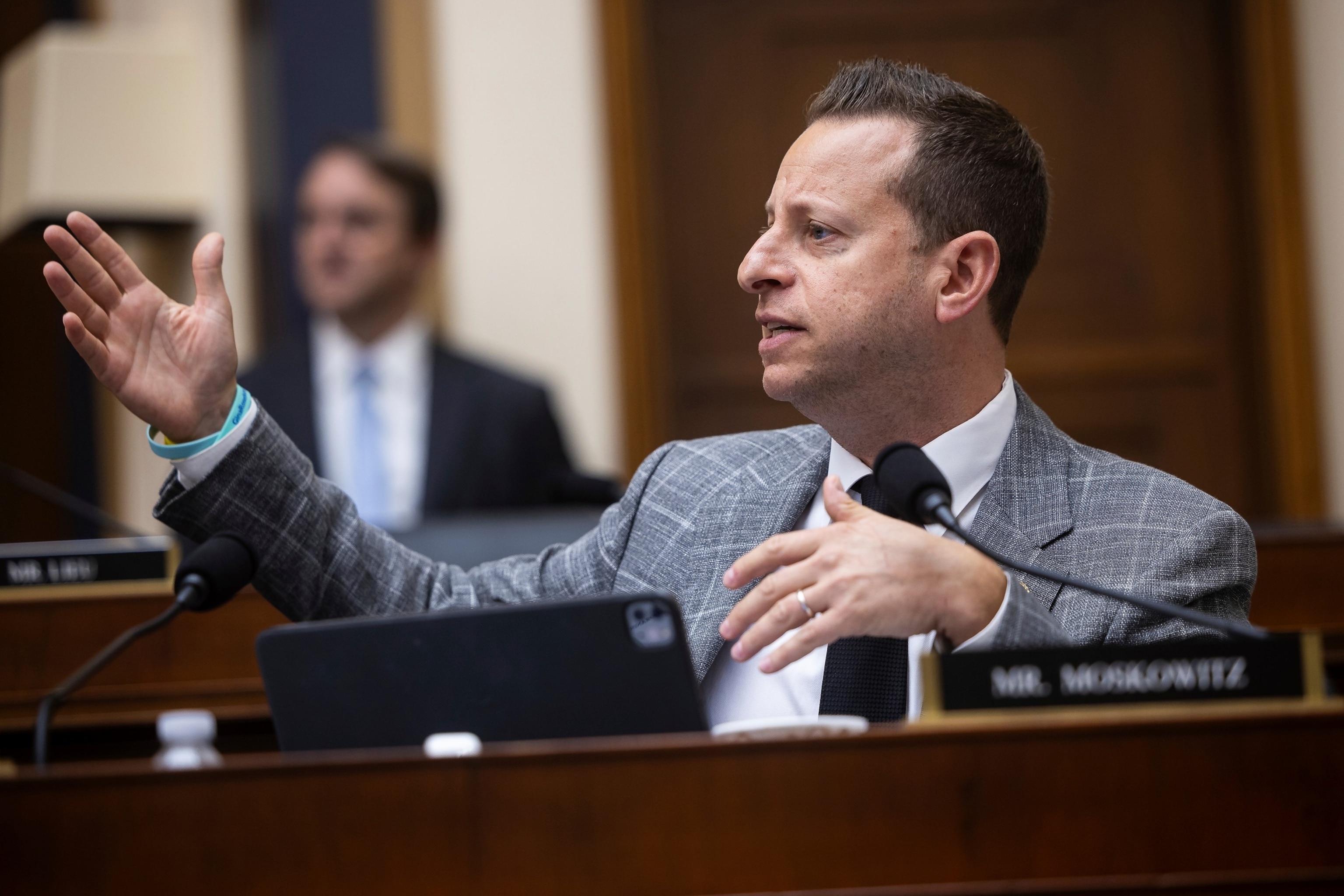
Rep. Jared Moskowitz, D-Fla., speaks during a House Judiciary Committee hearing on Capitol Hill on Sept. 17, 2025.
Francis Chung/Politico/AP
Moskowitz fends off challenge from DSA candidate
In the Democratic primary for Florida’s 25th District, two-term incumbent Rep. Jared Moskowitz, who was also running in a redrawn district, fended off a challenge from Democratic Socialists of America candidate Oliver Larkin.
The race highlighted how support for Israel is becoming prominent issue in this year’s election as more Democrats have become less supportive. Moskowitz has been a staunch supporter of Israel while Larkin has called for the U.S. to cut off aid.
The race was a continuation of established Democratic candidates facing challenges from progressives, as seen in the Senate race in Michigan.
Moskowitz now faces a competitive general election in November, as his seat is one Republicans see as a top pickup opportunity.
About the Author
