In the final months before the high-stakes midterm election, President Donald Trump has come out against regulation on controversial tech issues from artificial intelligence to data centers to Flock cameras — positions that don’t jibe with several Republican candidates’ running in this midterm election.
Trump has dismissed concerns from lawmakers and AI developers about potential dangers of AI development, calling it a “hoax” and arguing against comprehensive federal regulation. Trump said in social media posts that regulation would put American AI development at a disadvantage to China.
Alex Brandon/AP Photo
In Michigan, GOP Senate nominee Mike Rogers has called for a “national security framework” on AI and to “slow down development of AI in order to allow the government and its partners to catch up.”
His opponent Dr. Abdul El-Sayed used the president’s statements on AI regulation as an attack against Rogers.
“Donald Trump always puts his own interests over the interests of the rest of us. And Mike Rogers, he’s going to put whatever Donald Trump wants over you, and that’s the danger,” El-Sayed said in a forum this week with a local news station.
Rogers has not publicly responded to El-Sayed’s comments.
In Texas, Republican Senate candidate Ken Paxton, the state’s attorney general, has pitched himself as a champion of big tech regulation. On the campaign trail, Paxton has touted his lawsuits against major social media companies and his calls for restrictions on the ability of AI bots to interact with underage users.
Paxton hasn’t weighed in on potential safety risks coming out of major AI companies. His campaign did not respond to specific questions about his stances on federal regulation on AI.
Paxton’s Democratic opponent, state Sen. James Talarico, unveiled an AI regulatory platform in his campaign launch — focused largely on advocating against job losses due to AI and on greater export controls on AI chips.
In an appearance alongside businessman Mark Cuban last month, Talarico talked about the need for comprehensive federal guardrails on AI.
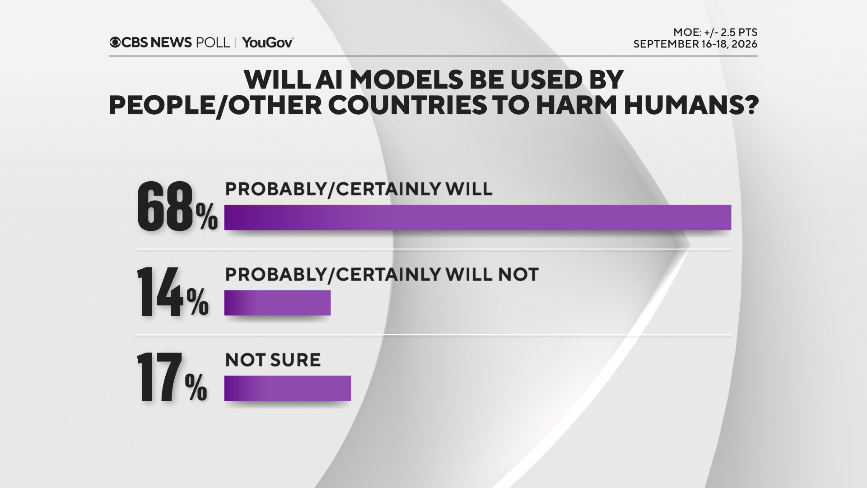
Polling shows that Americans are concerned about the role that AI is playing in our lives, a Marquette poll conducted earlier this month found about two-thirds of adults saying AI is a bad thing for society.
A March Quinnipiac University poll found 74% of Americans saying that the government was not doing enough to regulate AI; just 13% said the government was doing enough.
Data centers
Data centers are another key issue ahead of the midterm elections where Trump — who has defended data center construction as an economic and national security win — has differed with Republican candidates.
Rogers has called for a one year moratorium on new construction in Michigan. Republican Sen. Jon Husted, running for reelection in Ohio, is sponsoring legislation aimed at making data centers pay for their utility usage.
The president’s own comments could pose difficulty for vulnerable Republican candidates as he continues with incendiary rhetoric, writing in a social media post last month that communities that oppose data centers “want to be backwards and poor.”
Voter sentiment has shifted on the issue of data centers. The Marquette poll found 71% of adults said the costs of building data centers outweigh the benefits, up from 62% in January.
Flock cameras
Controversial automatic license plate readers — and their most common camera type, Flock — have become an emerging political flashpoint in midterm races.
Trump said last month that he “sort of” likes them “because of law enforcement,” acknowledging that some people “think it’s an infringement.” Advocates of the camera have argued that the cameras reduce crime and improve public safety.
In Wisconsin, Republican candidate for governor, Tom Tiffany, has called on a moratorium on state funding for flock cameras pending a new task force. His democratic opponent, Milwaukee County Executive David Crowley, has issued an order limiting the use of the cameras by the county.
In Pennsylvania, both Democratic Gov. Josh Shapiro and Republican challenger Stacy Garrity have publicly supported a ban on the cameras.
Highly publicized cases of misuse have swayed public sentiment on the use of the cameras by law enforcement.
The Marquette poll found 61% of Americans said the cameras are unacceptable violations of privacy rights while 39% said they are an important tool for police investigations.
Flock said in a statement to ABC News last month that the company has made changes aimed at ensuring privacy and welcome regulatory efforts.
“We support thoughtful, bipartisan legislation that puts strong privacy, transparency, and accountability guardrails in place while preserving law enforcement’s ability to use technology responsibly to keep people safe,” Flock said in the statement.
About the Author